
Why I'm creating Rêvivarium
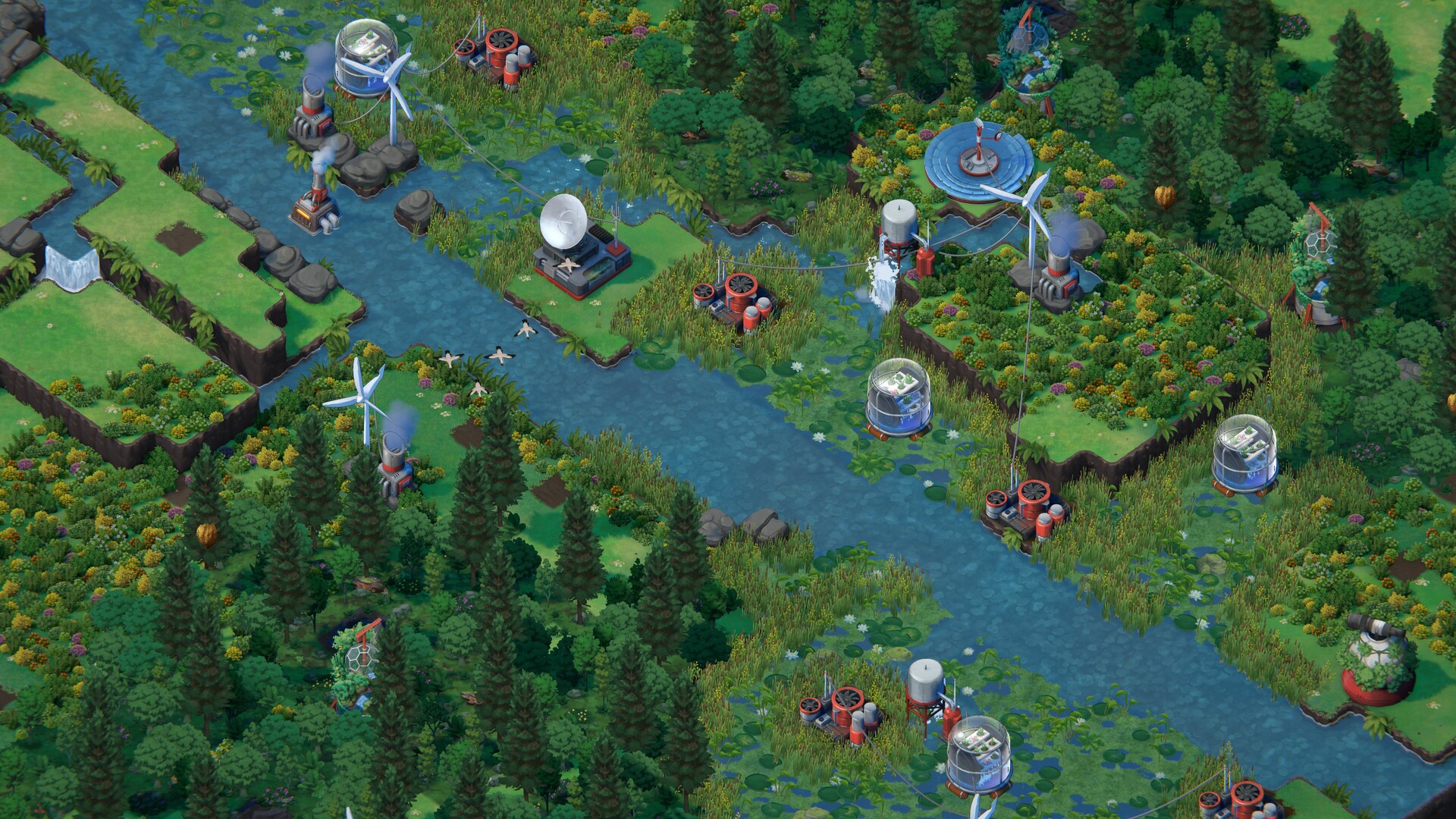
Last time I got really excited by a game trailer was when i discovered Terra Nil.
The trailer showed a player slowly turning a barren wasteland into a vibrant, living ecosystem.
Watching plants, trees, and animals gradually reclaim the desert was mesmerizing. I just couln't wait!
Then the game came out, and… well, it was a letdown.
Saving nature… with giant factories
Don't get me wrong — the game isn't bad. It's just that every level boils down to saving nature by… building ugly, polluting machines, tearing them down when you're done, and then… leaving for the next mission.
Why was I disappointed? Because the game — through its very mechanics — is rooted in a worldview I increasingly struggle with. In Terra Nil, you don't learn to be part of an ecosystem [en], to observe nature or to nurture life: you impose. Humans show up uninvited with their big machines and their big egos, decide a forest goes here, a meadow goes there, and once they've earned their good-little-environmentalist gold stars, they pack up and leave.
It's the same mindset that led us to channel every river into straight lines [fr], drench our fields in pesticides, burn oil to grow tomatoes in winter, and build cities that are nothing but oceans of concrete.
I started dreaming of a game that would let you bring a dead world back to life — but without steamrolling the beauty, complexity, and autonomy of living things… and without promoting some absurd brand of techno-solutionism.
A game that wouldn't put me in a position of all-powerful overlord. One where the living world isn't my property but has an existence of its own.
A game where nature isn't just a resource to exploit but a complex system to observe, understand, and admire.
A game that would let me express that primal, gut-level urge to make things grow.
That's what made me want to create Rêvivarium.
Other sources of inspiration
Among my other influences, a few of my all-time favorite games:
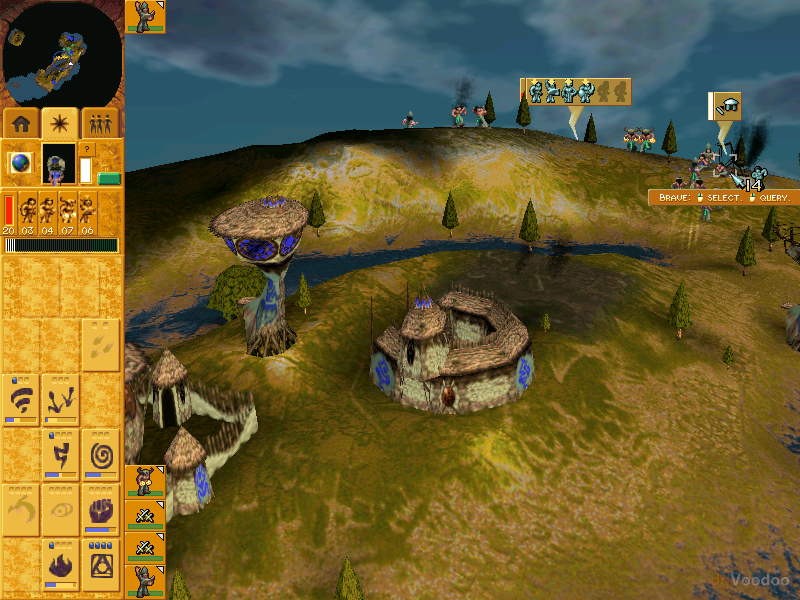
Populous: the Beginning, my number one forever and always! A god game where you lead a Shaman and her people across a 3D world: I love the bird's-eye view, the world that feels lush and alive, the ability to terraform by casting spells…
Black & White, another god game where you gain influence by performing divine acts like making it rain or planting forests (or by flinging worshippers over a mountain, but let's not dwell on that…). I loved the feeling of being part of village life by controlling the weather (although trying to prevent your giant creature to continuously poop on the grain reserves does get old after a while).

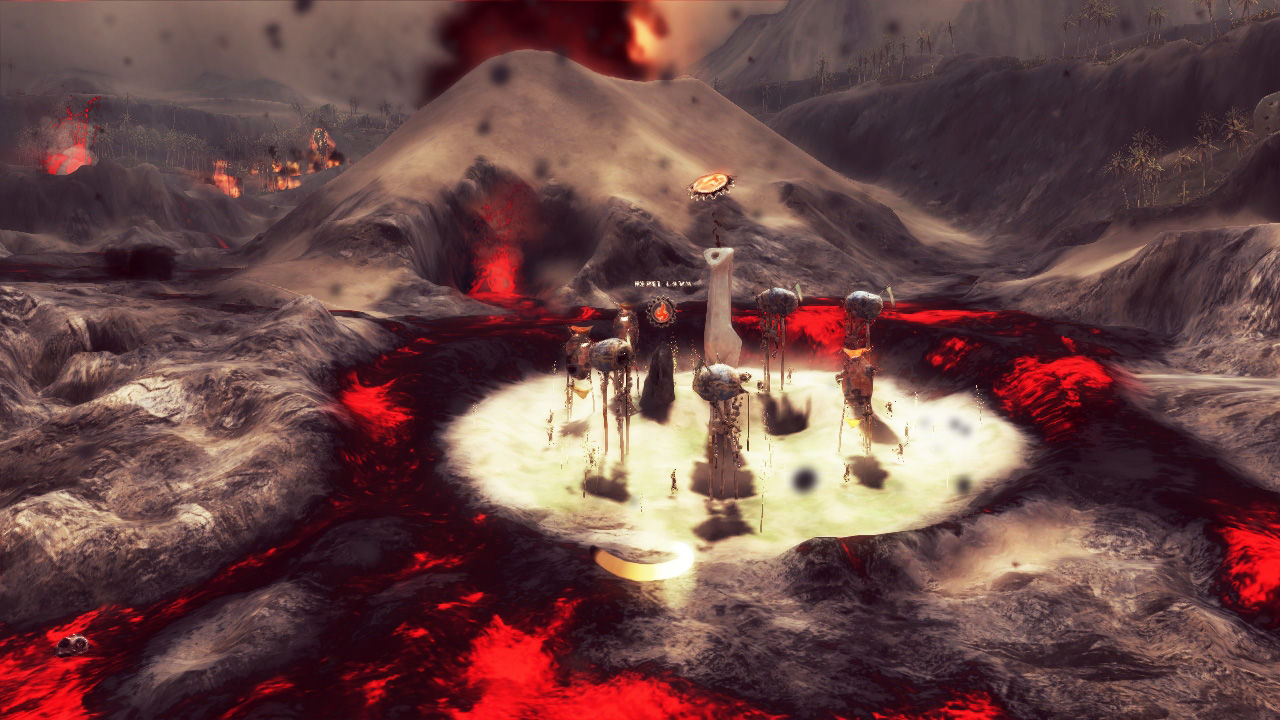
I discovered From Dust later on, but it features terraforming elements and a surprisingly deep water simulation. And volcanoes!
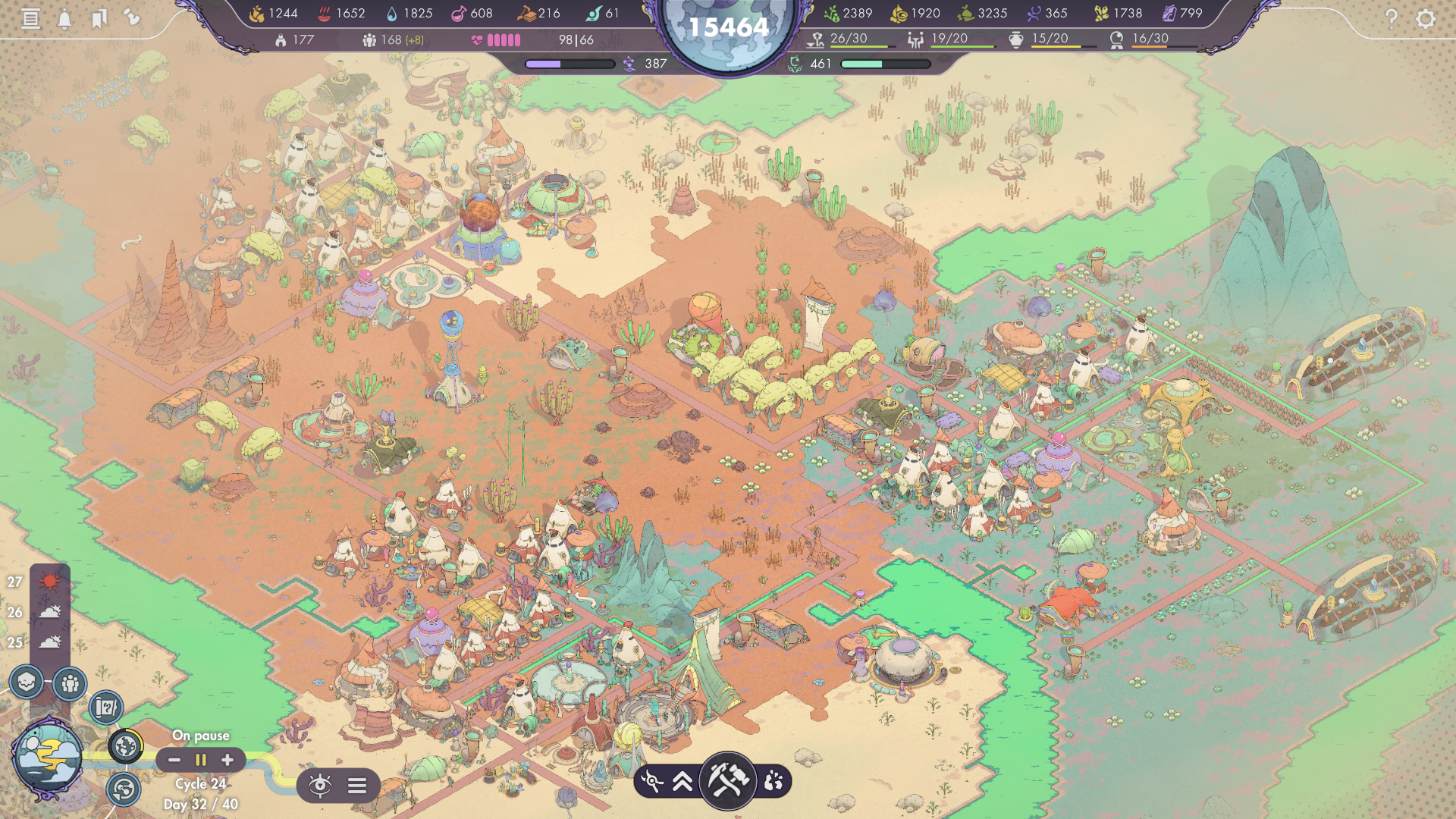
Another late discovery: Synergy is a gorgeous city-builder centered on community, climate adaptation, and the study of plants. The atmosphere is stunning, and it's a fascinating mechanic to learn about plants in order to figure out how to use their resources.
The game design tensions
The thing is, I'm struggling to reconcile my ambitions with my sources of inspiration.
For instance, how do you reconcile a god game — where the player is omnipotent by definition — with the absence of domination?
How do you give the player agency if nature grows and settles on its own?
How do you avoid boredom in a game that embraces the slow rhythms of the natural world?
A simulated ecosystem
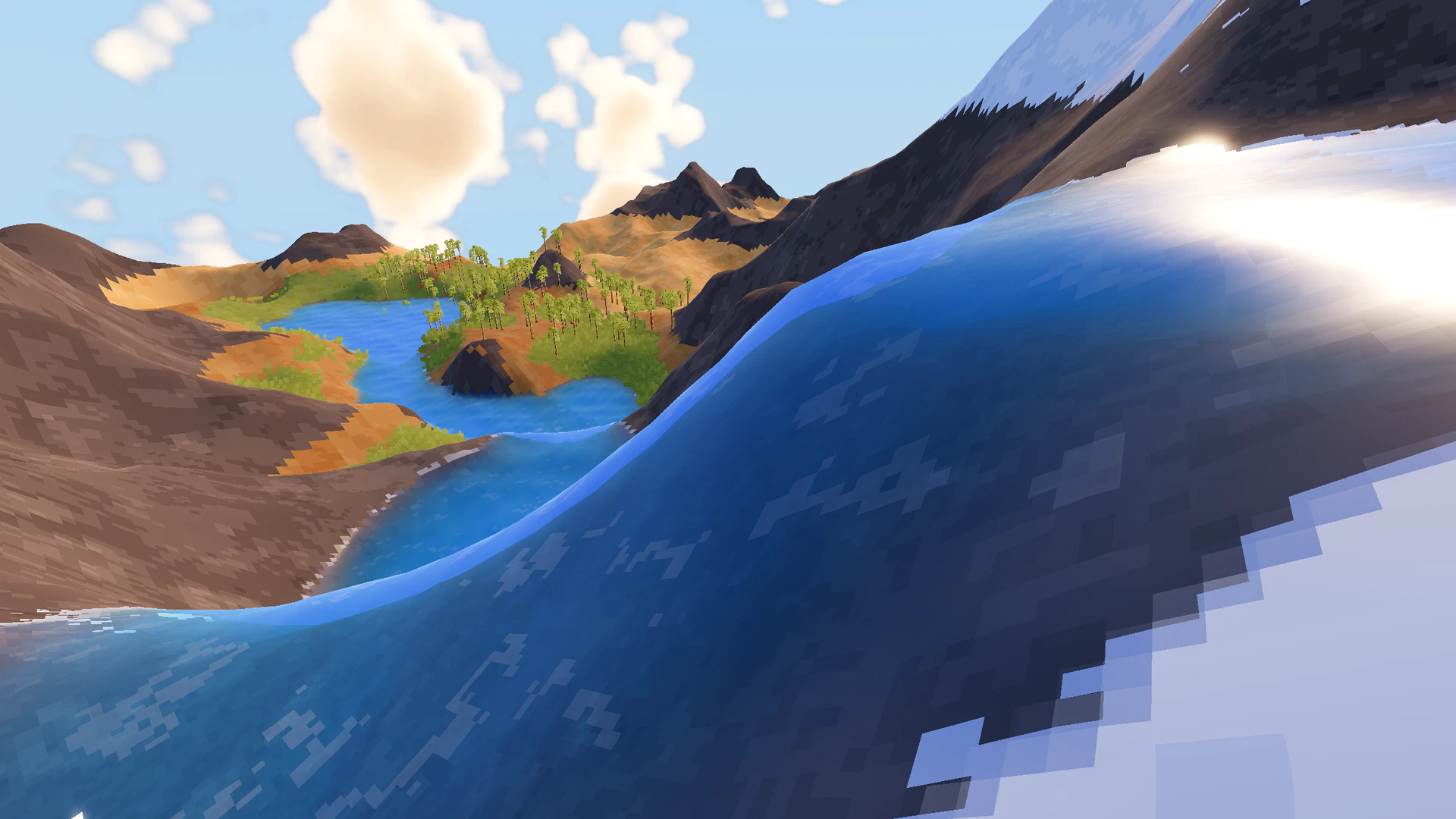
The direction I'm heading to resolve these tensions is real-time simulation of a complete ecosystem.
Make it rain on a mountain and the water will erode the rock, carry sediments downhill, and form a pond over a few centimeters of soil. Moss will grow, then grass, then a bush, a tree, a forest…
The player doesn't control nature — they control the conditions, and the world reacts according to its own rules that you'll need to observe and learn to understand… or suffer the consequences.
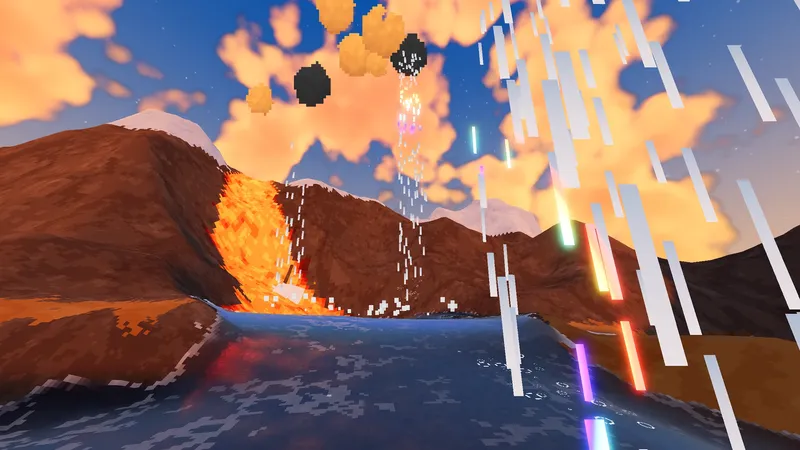
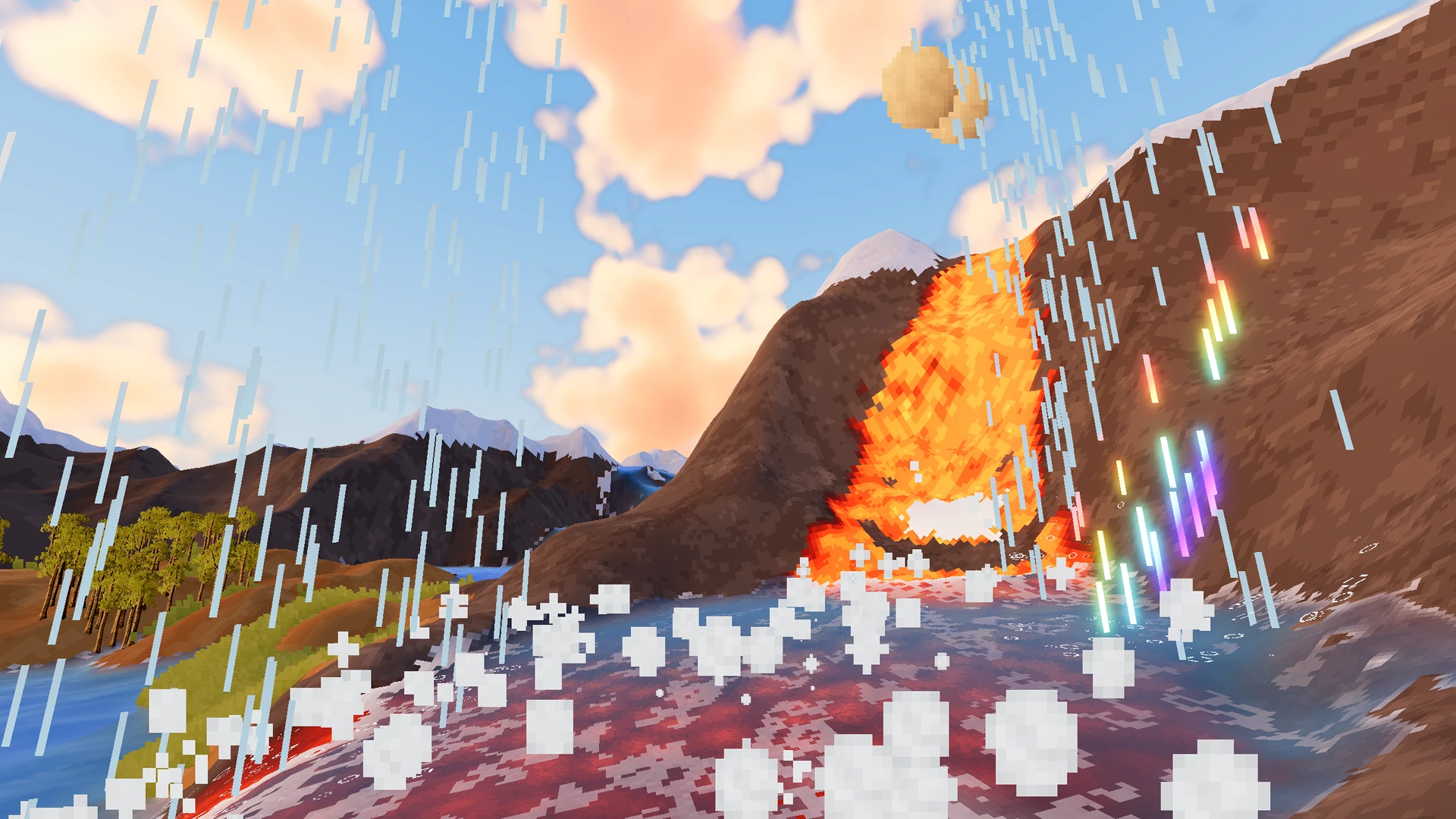
Wake up a volcano and it burns a forest, leaving bare soil vulnerable to wind erosion, and so on.
What exists so far
I've been working on this project for a little over a year, purely in my spare time — evenings and weekends. It moves at its own pace, slow but steady.
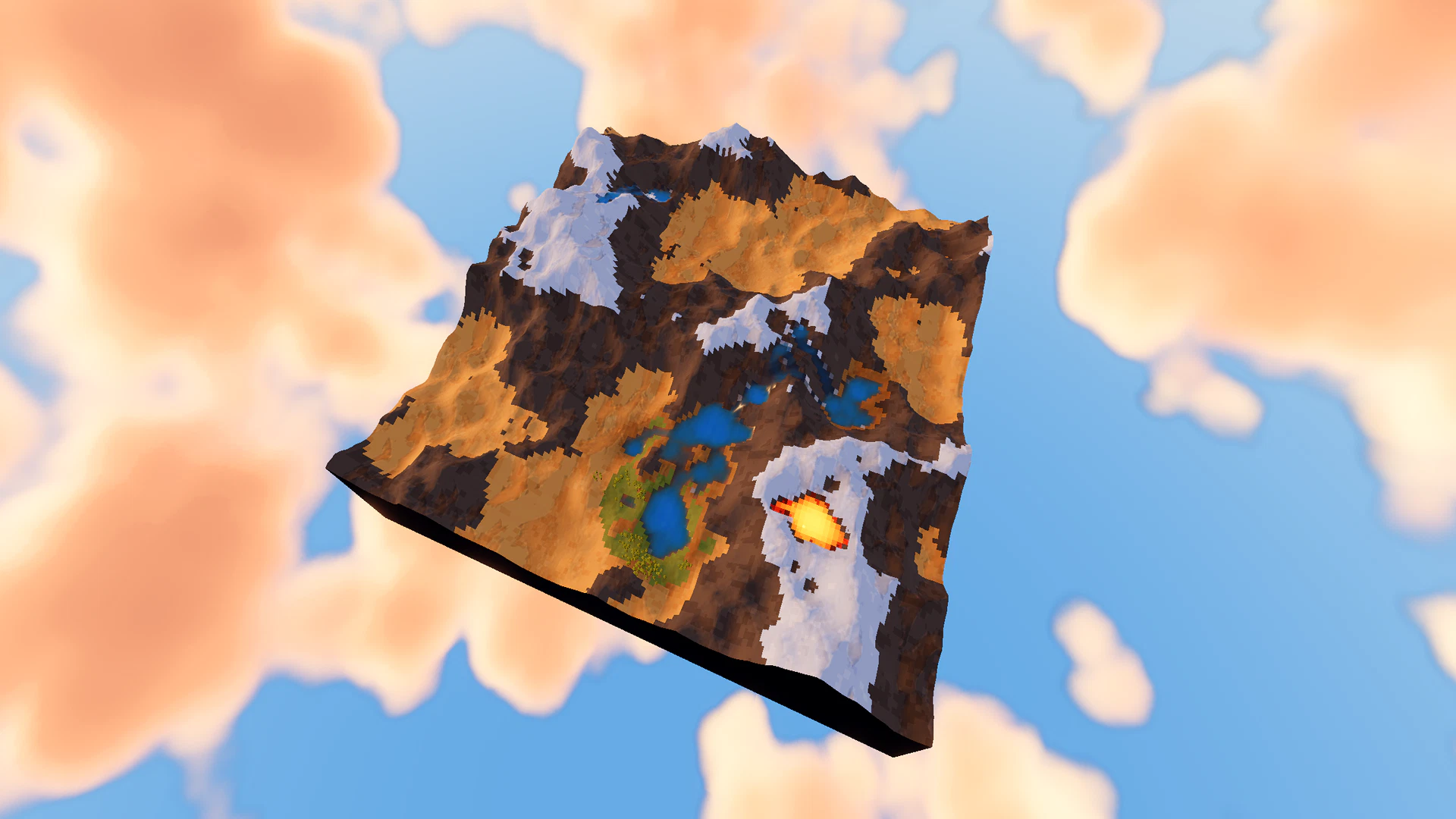
It's still rough around the edges: no sound, no music, no actual gameplay yet, but the technical foundation is solid and many phenomena are already simulated:
- water flows, erodes the ground, transports sediments, seeps into the soil, evaporates, condenses into clouds, falls as rain, freezes, melts;
- wind blows, erodes the ground, carries earth, pushes air masses around, reacts to terrain topography, forms vortices and cyclones;
- lava flows, boils water, heats the air, cools down, and crystallizes into rock;
- plants colonize space based on local conditions, grow, die, and enrich the soil with their humus;
- and more.
All of these phenomena are simulated in real time, running in parallel, using physically-accurate models.
The project is built with Godot, the free and open-source game engine. And it even has a name!
Rêvivarium
In Latin, -arium is the suffix for "a place dedicated to…"
- aquarium: a reservoir for water;
- solarium: a place to enjoy the sun;
- vivarium: a place to keep living animals.
Rêvivarium is the place where life will be reborn — with a touch of the French word rêve (dream) woven in. Pretty neat, right?
Get involved
If this project speaks to you, I plan to share more about its progress going forward.
To stay in the loop, you'll want to subscribe to the newsletter or find me on social media (links in the footer).
And if you'd like to share an idea, ask a question, or just say hello, drop me an email.
Cheers 🌱